

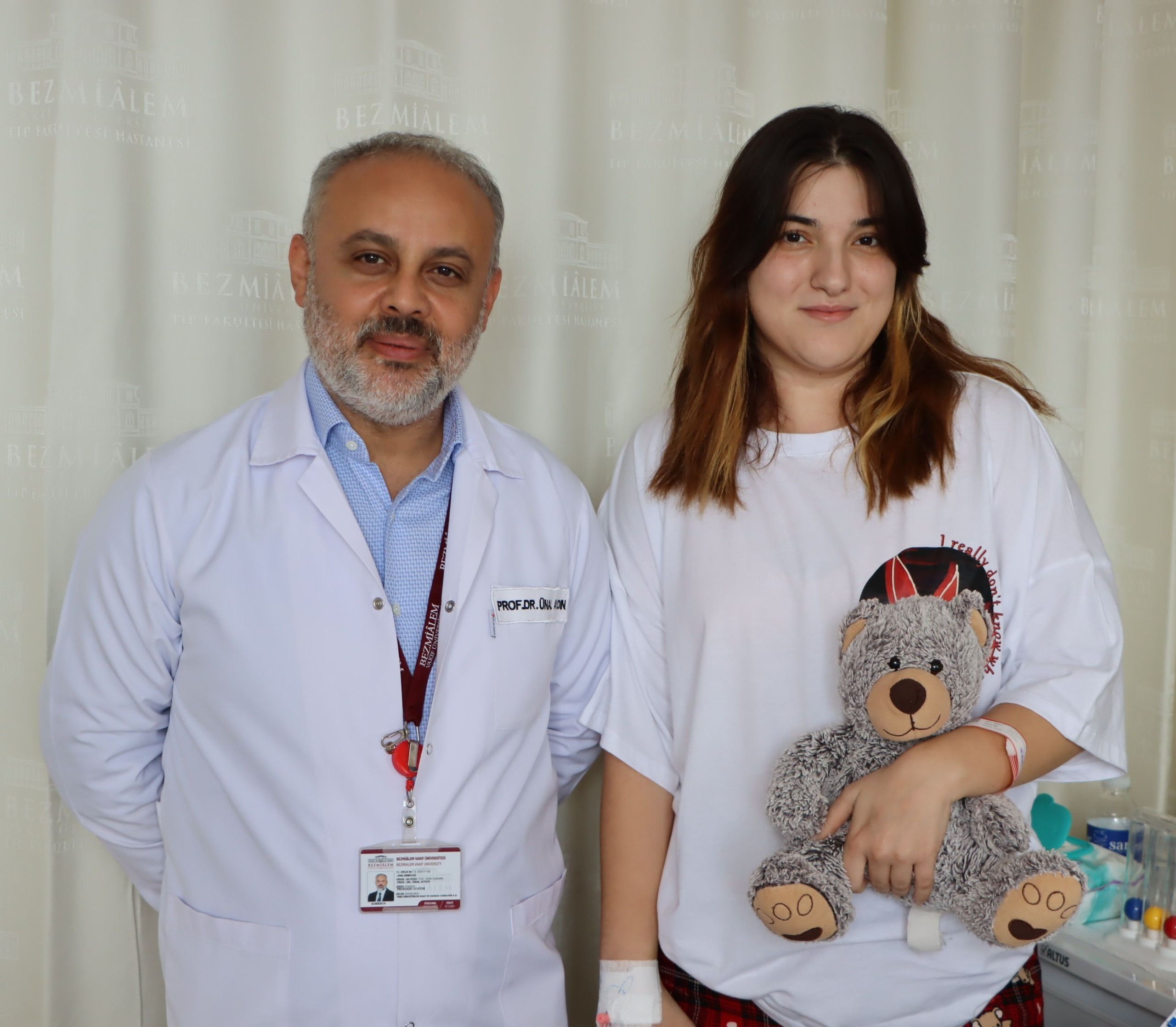
Doğuştan kalp deliği ve dolaşımı bozan damar anomalisiyle yaşayan hastaya, robotik cerrahiyle tek seansta müdahale edildi. Küçük bir kesiyle yapılan operasyon sayesinde hem kalpteki yapısal sorun giderildi hem de ileride kalp yetmezliğine yol açabilecek süreç durduruldu.
Kalp ve damar cerrahisinde robotik cerrahinin sunduğu imkânlar, doğumsal kalp hastalıklarında yüz güldürücü sonuçlar ortaya koyuyor. Prof. Dr. Ünal Aydın doğuştan iki ayrı kalp problemi bulunan bir hastaya, tek seansta uygulanan robotik cerrahiyle başarılı bir müdahale gerçekleştirdiklerini açıkladı.
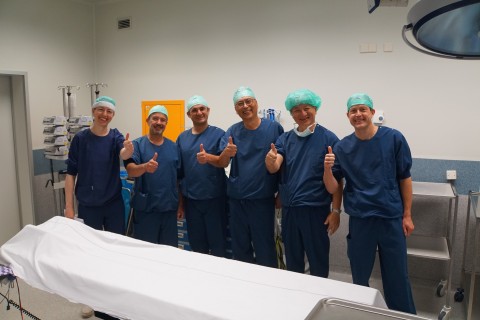
Hastanın kalbinde doğuştan bir delik bulunduğunu ve aynı zamanda akciğerden gelen damarların yanlış tarafa boşaldığını belirten Kalp ve Damar Cerrahisi Uzmanı Prof. Dr. Aydın, hastanın aslında eş zamanlı iki ciddi sorunla yaşadığını ifade ederek, “Robotik cerrahiyle sağ taraftan yaklaşık 3 santimetrelik küçük bir kesiyle kalbe ulaştık. Kalpteki deliği kapatırken, aynı seansta akciğerden gelen ve dolaşımı yanlış yöne aktaran damarı da olması gereken yere transfer ettik. Böylece iki ayrı problemi tek operasyonla çözdük,” dedi.
Şikâyetler 30 yaşından sonra artıyor
Operasyon öncesinde hastanın çarpıntı ve bayılma şikâyetleri yaşadığını, özellikle son üç ayda bu belirtilerin belirginleştiğini aktaran Prof. Dr. Ünal Aydın, doğumsal kalp hastalıklarının yıllar boyunca sessiz ilerleyebileceğine dikkat çekerek, “Bu tür hastalıklarda 20–30 yaşlarına kadar kişi çoğu zaman hiçbir şey hissetmez. Genellikle tesadüfen yapılan bir ekokardiyografide fark edilir. Ancak 30’lu yaşlardan sonra şikâyetler artmaya başlar, 40’tan sonra tablo daha da ağırlaşır. 50’li yaşlara gelindiğinde ise kalp yetmezliğine kadar ilerleyebilir,” diye konuştu.
Kalp yetmezliğine giden süreç durduruldu
Prof. Dr. Ünal Aydın, bu rahatsızlıkların kısa vadede değil, yıllar içinde kalbi yorar hale geldiğini vurgulayarak, zamanında yapılan cerrahi müdahalenin kalp yetmezliği riskini ortadan kaldırdığını belirtti.
“Artık normal bir insan gibi yaşayacak”
Operasyon sonrası hastanın durumunun iyi olduğunu ifade eden Prof. Dr. Ünal Aydın,
“Bu işlemden sonra hastamız için artık her şey normale döndü. Normal bir insan nasıl yaşıyorsa, o da öyle yaşayabilecek. Özel bir kısıtlaması yok. Elbette rutin kontrollerimizi sürdüreceğiz ancak kalbin yapısı ve fonksiyonları tamamen normale getirildi.” İfadelerini kullandı.
EN
Two Congenital Heart Conditions Corrected in a Single Surgery
A patient living with a congenital heart defect and a vascular anomaly that disrupted blood circulation was treated in a single session using robotic surgery. Thanks to the operation performed through a small incision, both the structural problem in the heart was corrected and a process that could have led to heart failure in the future was halted.
The opportunities offered by robotic surgery in cardiovascular surgery are delivering encouraging results in congenital heart diseases. Prof. Dr. Ünal Aydın announced that they successfully performed a single-session robotic surgery on a patient who had two separate congenital heart conditions.
Stating that the patient had a congenital hole in the heart as well as pulmonary veins draining into the wrong side of the heart, Cardiovascular Surgeon Prof. Dr. Aydın emphasized that the patient had actually been living with two serious conditions simultaneously.
“With robotic surgery, we accessed the heart through a small incision of approximately 3 centimeters on the right side. While closing the hole in the heart, we also transferred the pulmonary vein that was directing blood flow in the wrong direction to its proper location during the same procedure. Thus, we resolved two separate problems with a single operation,” he said.
Symptoms Increase After the Age of 30
Prof. Dr. Ünal Aydın explained that prior to the operation, the patient experienced palpitations and fainting, with symptoms becoming more pronounced over the last three months. Drawing attention to the fact that congenital heart diseases can progress silently for many years, he stated:
“In such conditions, patients often feel nothing until their 20s or 30s. These problems are usually detected incidentally during an echocardiographic examination. However, symptoms tend to increase after the age of 30, worsen further after 40, and may progress to heart failure by the 50s.”
Progression Toward Heart Failure Was Prevented
Prof. Dr. Ünal Aydın emphasized that these conditions do not strain the heart in the short term but gradually over the years, noting that timely surgical intervention completely eliminates the risk of heart failure.
“He Will Now Live Like a Normal Person”
Stating that the patient is doing well after the surgery, Prof. Dr. Ünal Aydın said:
“After this procedure, everything has returned to normal for our patient. He will be able to live just like a healthy individual. There are no special restrictions. Of course, we will continue routine follow-ups, but the structure and function of the heart have been fully restored.”